Rebecca Kenny, Head of the RCN Foundation Centre for Compassionate Leadership in Nursing and Midwifery, shares her reflections from the inaugural Compassionate Leadership Exchange with guest speaker, Francine Lacqua on staying grounded, prepared and authentically human.
Leading yourself when leadership feels exposed
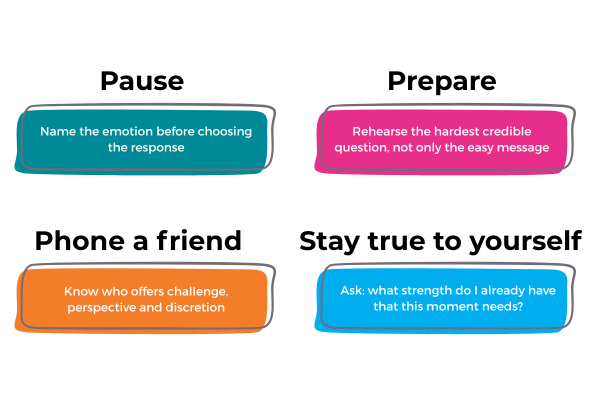
Emotion can strengthen leadership. The challenge is to lead with emotion, rather than react emotionally.
Lead with emotion, not emotionally
Emotion is not something leaders need to remove. It can signal what matters, help us connect and give decisions humanity. The discipline is to notice the feeling, create enough space to think, and choose a response rather than letting the first reaction lead.
Prepare for the tough question
Difficult questions feel less destabilising when we have anticipated them. Preparation is not about scripting away honesty – it is about understanding the issue, testing the gaps in our answers and deciding what we can say clearly, so we can stay present when the pressure rises.
Create a circle you can call
Senior responsibility can be isolating. Build a small, trusted circle before you need it: people who will answer the phone, listen without performance, challenge your thinking and help you regain perspective. A network is useful; a circle of trust is sustaining.
Use what you have
Do not copy the most forceful person in the room or assume credibility requires aggression. Lead through the strengths that are genuinely yours, including warmth, curiosity, calm and humour. Authenticity is not an excuse to avoid growth; it is the foundation from which growth becomes believable.
Leading others when the way ahead is unclear
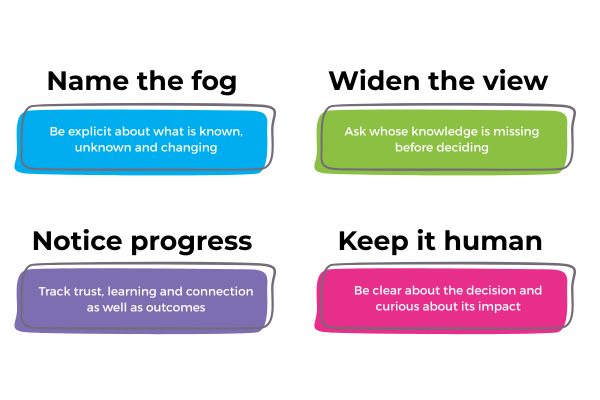
Compassionate leadership does not require perfect certainty – it requires connection, candour and purposeful action. When there is no complete fix, leadership may be judged by how people are held, involved and helped to move forward.
Offer direction without pretending certainty
Leadership can feel like wading through fog: accountable for progress without full visibility. People may not need false confidence. They need an honest account of what is known and unknown, the next sensible step and confidence that the situation will be kept under review.
Bring people together around the work
A vision is not executed by the person who announces it. Leaders create shared ownership by listening to what others can see, making space for contribution and connecting people across boundaries. Convening is not a soft extra; it is how complex work becomes possible.
Redefine success when there is no fix
Some problems cannot be neatly solved. Progress may mean preventing further harm, preserving trust, learning quickly, sustaining purpose or improving the choices available. Compassionate leaders are honest about what remains unresolved while making visible what has moved.
Do hard things in a human way
Compassion is not avoiding challenge, difficult decisions or accountability. It is remaining attentive to the people affected: explaining the why, listening to impact, treating people with dignity and holding standards without losing humanity. High expectations and compassion can coexist.